
2026-08-17
Surya Bheda and Chandra Bheda Pranayama: Finding Balance Between Sun and Moon
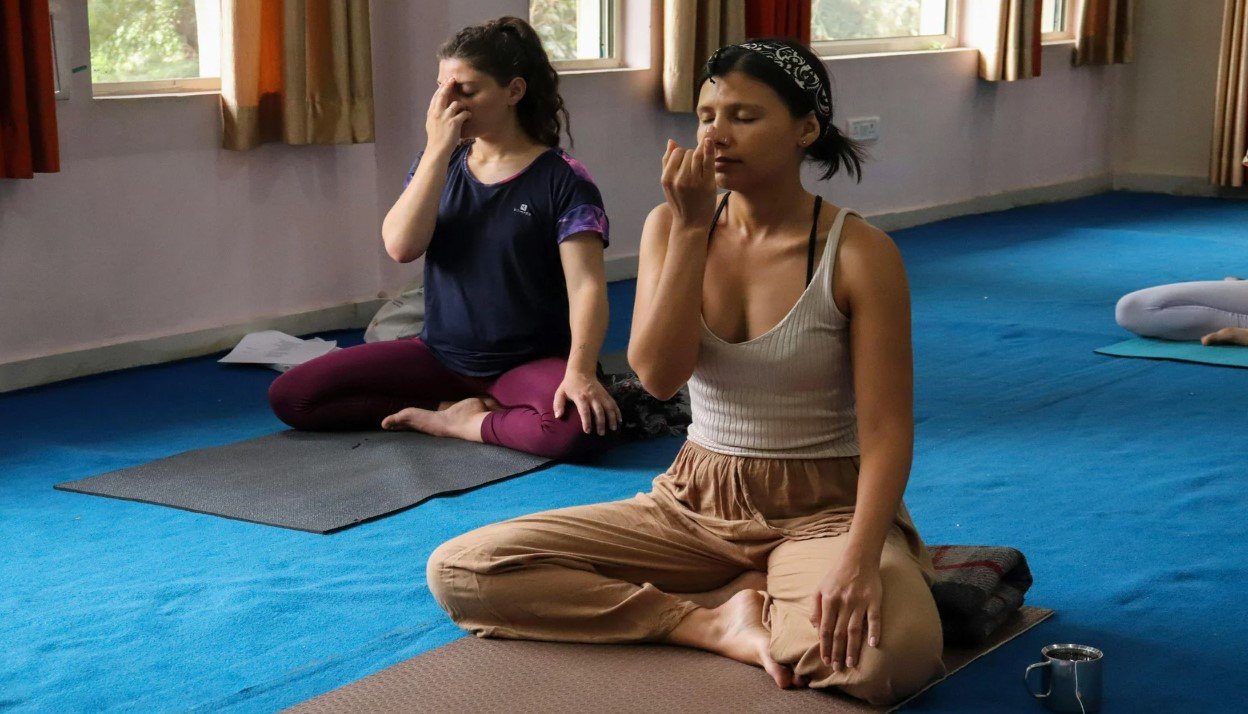
Some mornings, the world feels golden. You wake up bright, alive, the kind of energy that wants to move, do, create. And then there are other mornings, soft, slow, when your body wants to rest, when the sky outside feels like it is asking you to pause.
This practice sits in the same library as an introduction to pranayama.
Yogis saw these shifts long before modern science could measure them. They understood that within every breath flow two great rivers of energy, Surya (solar, active, warming) and Chandra (lunar, cooling, reflective). When one dominates for too long, we lose our balance. The practices of Surya Bheda and Chandra Bheda Pranayama are ways to return to our inner equilibrium, to harmonize the rhythms of body, mind, and spirit.
The Two Currents of Life
In yogic anatomy, there are said to be 72,000 nadis, or energy pathways. Among them, two are primary: Pingala Nadi, flowing on the right side, carrying solar force, heat, vitality, focus, and Ida Nadi, on the left, carrying lunar energy, coolness, calm, intuition.
Throughout the day, one nostril is usually more open than the other. This alternating rhythm of dominance is called swara, a sign of how the body balances these two forces naturally. But through pranayama, we can consciously direct that energy, to energize when we feel dull, or to cool when we feel restless.
Surya Bheda Pranayama: Breathing Through the Right Nostril
Surya means the sun, Bheda means piercing. So Surya Bheda literally means to pierce or awaken the solar channel. It is done by inhaling through the right nostril (the solar channel) and exhaling through the left nostril (the lunar one).
How to Practice
- Sit comfortably, Padmasana, Sukhasana, or even on a chair with your spine straight.
- Form Vishnu Mudra with your right hand, thumb, ring, and little fingers open.
- Close your left nostril with the ring finger and inhale deeply through the right nostril.
- Hold your breath gently, feeling warmth building around your navel or chest.
- Open the left nostril and exhale slowly, as if letting go of the heat with awareness.
- Repeat for about 9 to 12 rounds, resting between cycles if needed.
What It Does
Surya Bheda activates the Pingala Nadi, stimulating the sympathetic nervous system, the body's natural energizing mechanism. It raises metabolism, improves digestion, and sharpens concentration. If you have ever felt foggy or tired mid-morning, a few rounds of this breath can feel like sunlight spreading through your cells.
Modern studies also echo this ancient wisdom: right-nostril breathing increases oxygen use and awakens the left brain, the center of logic, reasoning, and focus.
Join a 300-hour yoga teacher training in India.
When to Practice
Morning hours, when you want clarity and motivation. Before a workout, teaching, or important decision. In cold or cloudy weather to warm up the body.
Avoid Surya Bheda if you are feeling anxious, overheated, or agitated, the goal is awakening, not overstimulation.
A Deeper Layer
Energetically, Surya Bheda nourishes the Manipura Chakra, located at the solar plexus, the seat of willpower and transformation. When this chakra is open, you feel courageous yet calm, strong yet compassionate. It is not about dominance, it is about a luminous confidence that arises from balance, not ego.
Chandra Bheda Pranayama: Breathing Through the Left Nostril
If Surya Bheda feels like a sunrise, Chandra Bheda is the cool moon reflected in a still lake. It is the opposite flow, inhaling through the left nostril and exhaling through the right, awakening the Ida Nadi, the channel of calmness and introspection.
How to Practice
- Sit comfortably, close your eyes, and settle your breath.
- Use your thumb to close the right nostril and inhale slowly through the left.
- Hold gently, not forcefully, and sense the breath descending like a cool river.
- Open the right nostril and exhale smoothly.
- Practice 9 to 12 rounds, letting the breath lengthen naturally.
What It Does
Chandra Bheda activates the parasympathetic nervous system, the body's rest and repair response. It calms the heart rate, cools the body, and relaxes the mind. It is particularly beneficial for those who experience anger, heat, restlessness, or insomnia.
Science echoes this too: left-nostril breathing stimulates the right hemisphere of the brain, the creative, emotional, and intuitive side. So if you have been overthinking, Chandra Bheda helps you return to the gentle rhythm of feeling instead of analyzing.
When to Practice
Evening hours or before sleep. During hot weather or emotional intensity. After physical exertion to restore calm.
Avoid it when you feel lethargic or low, it can make you even more passive. The essence, again, is to find harmony.
A Deeper Layer
Chandra Bheda connects to the Anahata Chakra, the heart center, the bridge between body and spirit. It brings softness, empathy, and patience. You start to listen more, not only to others but to your own heartbeat, your intuition. It is a beautiful practice for teachers, healers, and anyone whose path requires both strength and tenderness.
The Union of Sun and Moon
Yoga always points toward union. The word Hatha itself means Sun (Ha) and Moon (Tha). These two breaths, when practiced regularly, do not just balance energy, they balance how we live. Surya gives purpose, Chandra gives peace. One fuels action, the other restores clarity.
When these energies meet at the Ajna Chakra, the third eye, the central channel (Sushumna Nadi) opens. That is when breath becomes meditation, and meditation becomes stillness.
You do not need to force it. Just observe. Notice which nostril feels open today. Ask yourself, do I need more warmth or more coolness, more doing or more being? That awareness itself is yoga.
Precautions
- Always practice on an empty stomach and in a calm space.
- Skip breath retention if you have heart conditions or high blood pressure.
- Start gently, quality of breath matters more than count.
- Listen to your body, let the breath teach you patience.
In the End
In the carvings of ancient temples, you often see the sun and moon side by side, two eyes of the same divine face. Our breath carries that same intelligence, the pulse of expansion and rest, fire and flow.
When you learn to tune into it, life stops feeling chaotic. You begin to move in rhythm with nature itself.
So the next time you feel off balance, before you reach for coffee, your phone, or distraction, just pause. Close one nostril. Breathe in sunlight, or moonlight. And let the dance of the two bring you quietly home.
To learn more, visit the best yoga school in India and join a 200-hour yoga teacher training in India.
A natural next practice to read is pranayama in teacher training, or preparing for pranayama safely.