
2026-08-17
Opening the Heart: The Healing Power of Backward Bending Asanas
When the Body Remembers
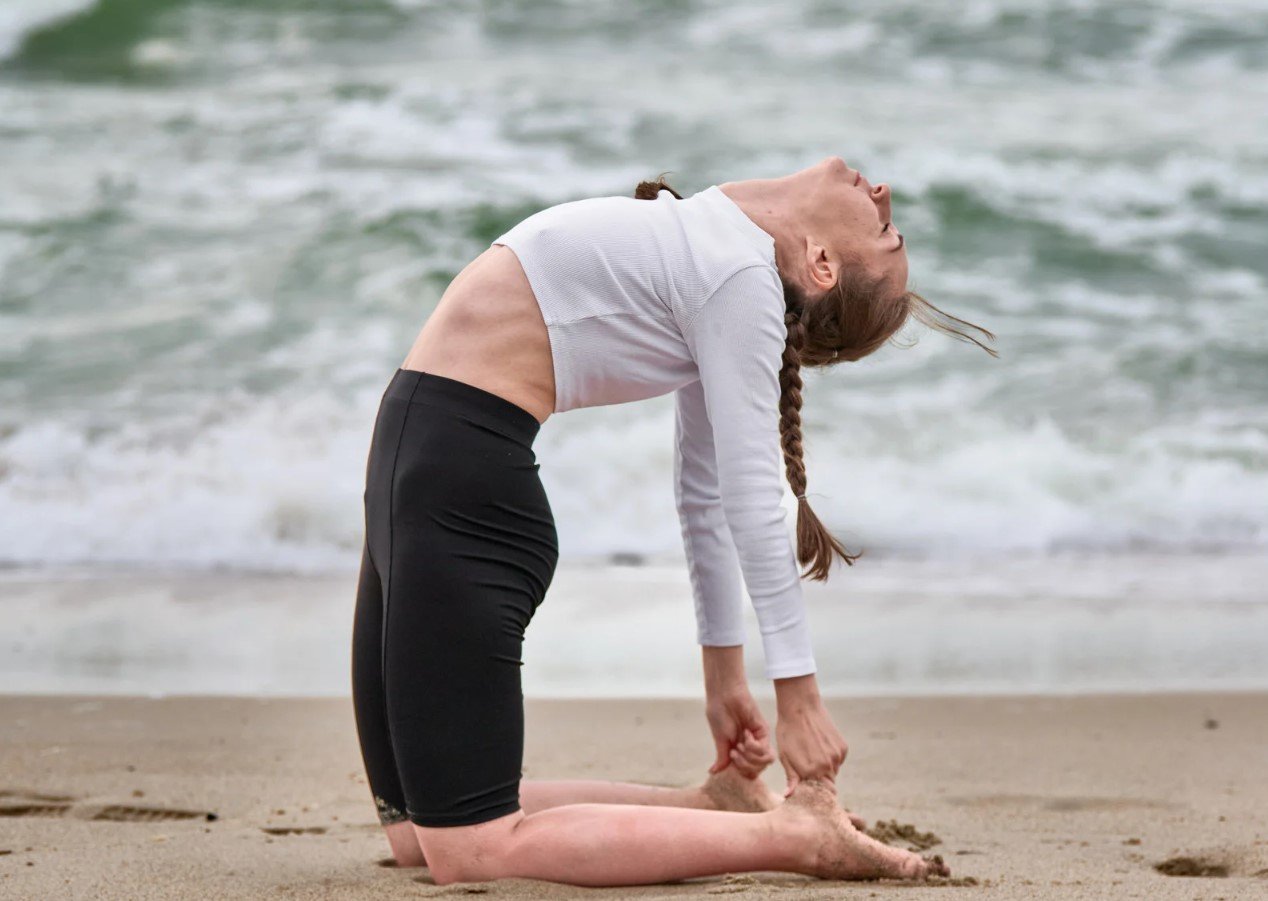
The first time I bent back into Ustrasana (Camel Pose), I did not expect to cry. It started with a small tremble in my chest, then a wave of heat that climbed up my throat. Suddenly, I was blinking back tears, tears that had nothing to do with pain.
This practice sits in the same library as the yogic approach to advanced poses.
Later that night, my teacher's words echoed in my mind: backbends do not just stretch your spine, they stretch your story.
It was true. Each backward bend seemed to uncoil something ancient, not just tight muscles, but guardedness, memories, old fear.
That is the quiet power of backward-bending asanas. They are not just movements, they are medicine. They help us remember how to open again, how to trust softness after years of protecting ourselves.
The Sacred Architecture of Backbends
Backward-bending asanas are often called heart-openers, and for good reason. Physically, they expand the chest, lengthen the front body, and strengthen the spine. But energetically, they awaken something that cannot be measured by anatomy.
When you arch your back and lift your heart toward the sky, you expose the most vulnerable part of your body, the chest, the throat, the belly. These are the places we instinctively protect when we are afraid. To open them is an act of courage.
Common backward-bending asanas include Bhujangasana (Cobra Pose), Ustrasana (Camel Pose), Dhanurasana (Bow Pose), Setu Bandhasana (Bridge Pose), and Urdhva Dhanurasana (Wheel Pose). Each one invites you to feel, not just stretch. They call you back into your own heart.
Check out our 200-hour yoga teacher training.
The Body as an Archive of Emotion
We do not just hold tension in our bodies, we hold stories. The heartbreak we never talked about, the anxiety we have normalized, the grief we tried to move past. It all settles quietly around the shoulders, the ribs, the heart.
Backbends help us meet that weight with breath and kindness. When we open the front body, the nervous system receives a message: it is okay to release.
Sometimes that release shows up as warmth, sometimes shaking, sometimes tears. It is all the same language, your body finally exhaling what it has held for too long. That is why, after a deep backbend, you might feel lighter, not because you worked out, but because you let go.
The Heart Center: Anahata Chakra
In yogic tradition, the Anahata Chakra sits at the center of the chest, the bridge between the physical and spiritual. It is the place of unconditional love, the love that does not ask for perfection, only presence.
When this energy center is blocked, we feel closed, disconnected, guarded. But when it opens, we begin to forgive, not just others, but ourselves.
Backward bends are one of the most direct ways to awaken this space. The Sanskrit word Anahata means unstruck sound, a vibration that has always been within you, waiting to be remembered. So when you breathe into your heart in Ustrasana or Bhujangasana, you are not just stretching tissue, you are tuning yourself back to that unstruck sound.
The Gentle Science of Healing
On a physiological level, backward bends stimulate the autonomic nervous system and improve oxygen flow to the lungs and brain. They open the chest, relieve slouching from long hours of sitting, and improve posture.
But the deeper healing is subtle: the shift from contraction to expansion. Every time you lean back and inhale fully, you retrain your nervous system to associate openness with safety instead of fear. Slowly, the body learns a new pattern, I can open, and I am still safe.
This is why so many students describe a sense of calm joy after practicing backbends, their bodies have just remembered trust.
Practicing Heart-Openers with Grace
There is a fine line between opening and overdoing. Healing never comes through force. Here is what experience teaches.
- Warm up first. Loosen shoulders, quads, and hip flexors.
- Lead from your heart. Let the chest rise before the head drops back.
- Engage your belly. A strong core supports a free spine.
- Use props. Bolsters and blocks make the pose feel safe, not scary.
- Rest after every backbend. Fold into Balasana (Child's Pose) to let the energy settle.
When practiced gently, backbends do not break you open, they invite you open.
A Small Practice for the Heart
Try this soft sequence on a quiet morning: Cat-Cow (Marjaryasana-Bitilasana) to wake the spine with breath, Low Lunge (Anjaneyasana) with fingers interlaced to open the chest, Bhujangasana (Cobra) lifting through the heart, not the chin, Ustrasana (Camel) with hands on the lower back or heels, breathing into the ribs, and Balasana (Child's Pose) to rest and feel what changed.
Sit quietly for a minute after, palms over heart. Notice what is alive inside you.
The Heart's Quiet Truth
Backward-bending asanas are not just poses, they are a language of forgiveness. Each time you arch the spine, you whisper to your own heart: it is safe to open now.
Some days, that openness feels radiant. Other days, it feels raw. But healing is not about perfection, it is about returning, again and again, to softness.
At Prakruti Yogashala, we hold space for this kind of gentle unfolding, where yoga becomes less about touching your toes and more about touching your truth. So bend back, breathe deep, and listen. Your heart has been waiting to be heard.
To learn more, visit the best yoga school in India and join a 300-hour yoga teacher training in India.
A natural next practice to read is spinal twists, or the power of inversions.