
2026-08-17
The Art of Hands-On Teaching and Adjustment
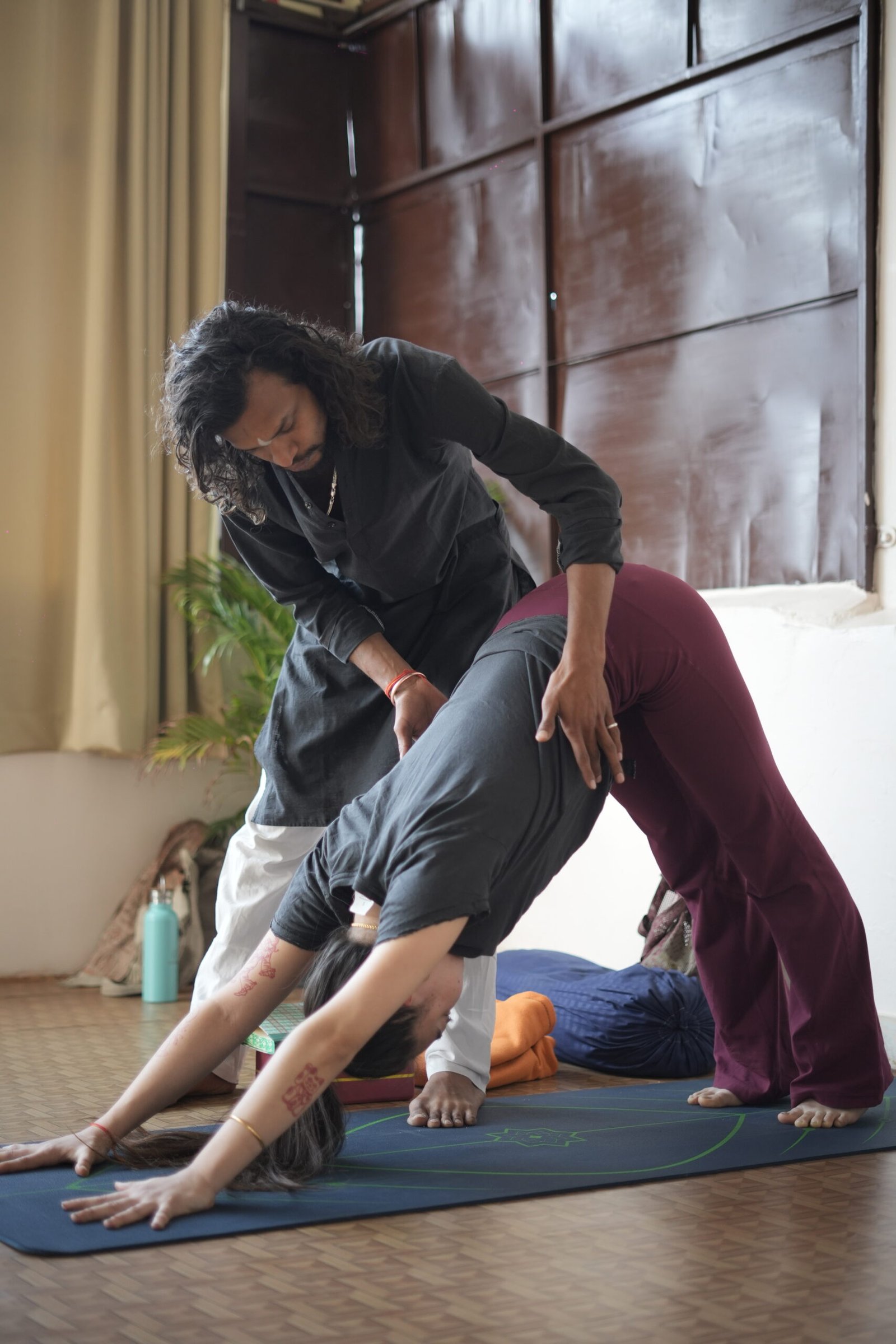
Learn the art of hands-on yoga adjustments with presence, ethics, and intuition. Discover how conscious touch in yoga builds trust, supports healing, and elevates your teaching.
This practice sits in the same library as choosing a yoga teacher training in Rishikesh.
Introduction: The Silent Language of Presence and Trust
In the sacred space of a yoga class, touch is never just physical. It is energetic. Emotional. Deep.
When we adjust a student, we are not just aligning a shoulder, we are communicating presence. And in a world where so many feel disconnected from their own bodies, this kind of touch can be profoundly healing.
But it has to be done right.
In this guide, we explore what it really means to offer hands-on support, from the ethics of consent to the subtlety of intuitive touch. Whether you are a new teacher or refining your craft, this is your reminder that adjustments are not about fixing, they are about accompanying someone on their path.
1. Hands That Guide: From Ego to Service
Here is the truth: you are not here to fix anyone.
One of the most powerful shifts in teaching is realizing that an adjustment is not about achieving a perfect pose. It is about offering support that meets the student where they are, not where your ego wants them to be.
Why this matters:
- It fosters humility and deep listening as a teacher.
- It gives the student agency and self-trust.
- It keeps the intention of yoga clear, union, not performance.
Let your hands hold space, not shape outcomes. That is where the real teaching lives.
2. Permission First, Always: The Ethics of Touch in a Vulnerable Space
Yoga is intimate. Bodies open. Emotions move. So before anything else, ask for consent.
This is not just about avoiding harm, it is about building trust. A student who feels safe is a student who can open.
Step-by-step for ethical touch:
- Use consent cards or clear verbal cues.
- Check body language, sometimes silence is a no.
- Keep it non-invasive, less is more.
- Ask again later, what is a yes today might be a no tomorrow.
- Hold space after the adjustment, make sure it landed well.
Pro tip: when in doubt, do not touch. Ask, connect, then guide.
Teaching is not just about alignment, it is about emotional safety. And that starts with choice.
3. The Healing Power of Touch in a Lonely World
We live in a time of isolation, where digital connection is constant, but physical connection is scarce. Many of your students are touch-starved or carry trauma from unsafe touch.
When used with sensitivity, your hands can remind someone they are not alone.
Even a simple grounding palm on the back during Child's Pose can say more than words ever could: you are supported, you are safe, you can soften now.
4. The Art of Listening with Your Palms
Technical knowledge is crucial, but it is not enough.
The best assists do not come from knowing every muscle in the body. They come from feeling the breath, the tension, the subtle invitation of the student's energy. This is what we call listening with your hands.
How to practice:
- Pair with another teacher or student.
- Close your eyes while gently placing your hands on their back or shoulders.
- Ask yourself: what am I feeling? What is needed here?
- Less pressure, more presence. Let intuition lead.
Bonus tip: practice adjusting in silence. No cues, just breath and connection.
This is how you develop the hands of a teacher, not just a technician.
5. When Words Fall Away, Touch Still Speaks
There will be moments in your teaching where the words do not land, where a student's mind is fogged, or emotion rises silently.
That is when the power of a steady, conscious touch becomes everything.
A grounded hand can say: breathe here, you are doing fine, you are not alone, come back into your body.
Touch, when offered with presence, becomes a kind of sacred language. One that transcends explanation, and goes straight to the nervous system, straight to the heart.
Final Thoughts: Adjust with Love, Not with Ego
Hands-on teaching is an art. It is not about control. It is about compassionate presence. It is about knowing when to support, when to hold back, and how to listen before you lead.
To wrap it up:
- Adjustments are sacred, use them with humility.
- Always ask permission, every time.
- Let your hands say what your voice sometimes cannot.
- Lead from intuition, not performance.
- Teach with touch, but touch with trust.
Want to learn hands-on skills the right way? At Prakruti Yogashala, we teach the art of hands-on adjustments with precision, presence, and love, because being a great teacher means knowing how to support others safely, soulfully, and with care.
Apply for our next RYT 200-hour or 300-hour teacher training course and step into the sacred art of teaching with your whole being, including your hands.
A natural next practice to read is yoga teacher training for beginners, or 100, 200, and 300 hour trainings compared.