
2026-08-17
A Gentle Guide to the Pawanmuktasana Series
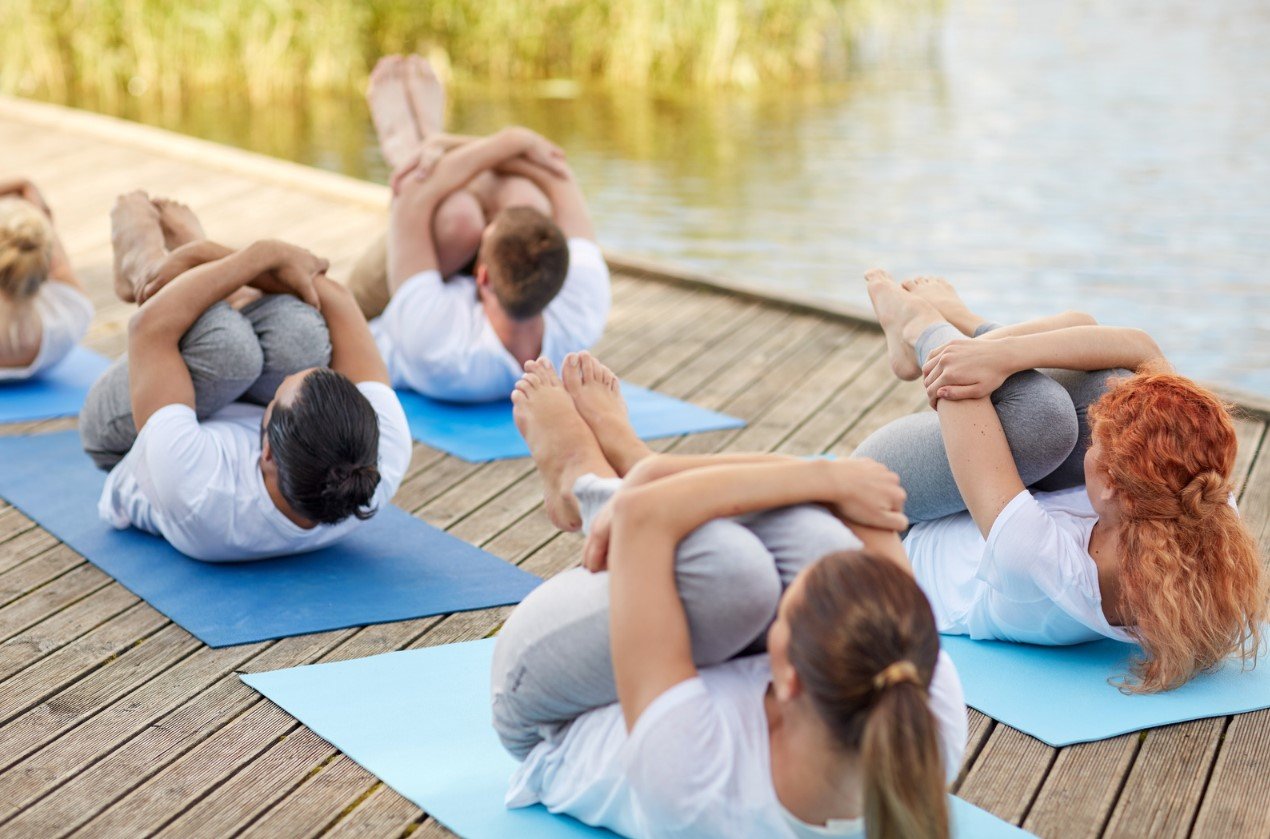
Travelers arrive in Rishikesh with different pictures of what yoga will be: headstands by the Ganga, long meditations, or simply a stretch after weeks of buses and trains. Whatever the starting point, we usually guide students toward the same first practice: Pawanmuktasana.
It is not glamorous. It rarely appears on social media. But quietly, it does its work: freeing the joints, soothing digestion, calming the restless mind. For beginners, it is an accessible doorway. For experienced practitioners, it is a reminder that yoga is not about complexity, but about presence.
What Pawanmuktasana Means
The name comes from Sanskrit: pawan (wind, energy or prana), mukta (release, freedom) and asana (posture). Pawanmuktasana is the series of postures that help release blocked energy from the body, much like opening a window in a stale room.
The Three Groups of Movement
We usually teach the series in three parts, moving slowly with the breath.
For joints and muscles (the anti-rheumatic group). Small, gentle circles at the ankles, knees, wrists and shoulders, the kind of movement a child makes without calling it yoga. These loosen stiffness, improve circulation and ease joint pain.
For digestion (the abdominal group). Hugging the knees to the chest (Supta Pawanmuktasana), gentle twists and simple core squeezes, which massage the belly and support digestion.
For energy flow (the shakti bandha group). Movements for the hips, pelvis and lower back, areas where tension often accumulates. Students frequently feel lighter and calmer after this part.
Benefits
With regular practice, joints feel more open, digestion improves, circulation increases, stiffness eases, and the nervous system settles. Many students find that anxiety softens and sleep deepens.
How to Begin
This is one of the most forgiving places to start a yoga practice. No flexibility or prior experience is required. Move with the breath, inhaling as you open and exhaling as you close, repeating each movement 5 to 10 times, and pausing often to notice the effect. Ten to fifteen minutes in the morning, before breakfast, is enough to change the tone of the day.
Pawanmuktasana and the broader foundations of safe asana practice are part of our 200-Hour and 300-Hour Yoga Teacher Trainings in Rishikesh.